Benefits of Urban Farms & Gardens

Why should you create your own urban thottam or gift one to someone in need? Because there is no simpler, pleasure-filled past time that has as many rewards or benefits, not just for the person practicing it, but also for other people and the planet at large.

  • Fresh & healthy food for all

    Nutrition & Food Security

    We live in a densely populated city, relying on produce cultivated elsewhere, travelling long distances before reaching us, and as the world increasingly worries about access to affordable and good quality food, urban farming has presented itself as a critical means of supporting food security, especially during crises. Concerned about how safely your food is grown, who has tampered with it and what could happen during a lockdown or flood? Growing your own organic greens and vegetables is the single best step you can take to gain control over what you and your family eats.

    For the less fortunate among us, the gift of a garden improves a vulnerable family’s access to nutritious food, and this access is in critical need of improvement as one young child out of every five in India is malnourished and wasting away. We should all aim to grow our own gardens as well as sponsor a garden kit for a deserving vulnerable family till every household across the city and the country is able to supplement their diets with healthy, homegrown produce.

  • Cooler homes, lower bills, safer future

    Energy & Carbon Sequestration

    Urban farming can improve environmental quality of the city by significantly reducing cooling load. In Cairo, Egypt, rooftops planted with vegetables have been recorded to be 7°C cooler than that of next door! This translates to less air conditioning needs, energy savings and lower electricity bills as seen in green-roofed homes in the Middle East which reduced their energy consumption by 24%-35% on average. Plants work several ways to help in this cooling — by reflecting the sun’s radiation, reducing the exposure of roofs and other concrete surfaces through shade and soil cover, and the process of evapotranspiration (where water vapour from leaves helps cool surroundings). Further, plants lock up carbon dioxide, reducing the level of this green house gas in the atmosphere.

    As urban food production goes up, the volume of transporting produce from afar will lessen, leading to further reduction in air pollution and food wastage (as we grow more perishable crops within cities, while rural areas can focus on less perishable foods). Just imagine, by starting a garden on your rooftop, you take one small step towards mitigating climate change, all the while reducing your bills and nourishing your family!

  • A city without landfills

    Waste Management

    Urban farming presents a wonderful opportunity and added incentive to start segregating waste and diverting it from landfills. Almost 40% of the total waste produced in Chennai is bio-degradable and when this ends up in a landfill, decomposing food and paper waste produce landfill gases that contribute to climate change. Composting biodegradable waste at home and using it in your garden is the perfect circular solution. If we all compost and reuse, reduce & recycle, we can achieve a Zero Waste city, one that is greener and cooler and produces fresh and tasty fruits and vegetables!

  • Water - never too much, nor too little

    Rain water run-off

    As a city, we’ve seen it all — parched through our droughts, and flooded during rains. We’ve depleted our ground water resources, paved over our wetlands and polluted our rivers causing widespread water scarcity, and yet the rains, which should be a blessing, often result in disaster. This is because Chennai city, like many others, is largely impervious, meaning that the large built up area and concrete surfaces reduce the ability to absorb water. Further, our storm water system struggles to cope with deluges, and our ability to capture and conserve this much needed resource isn’t optimal. Intensive green roofs with gardens can reduce rain water runoff by 50 – 85% in Indian metros through absorption and detention. This means lesser water going more slowly into the storm water drains and on to the streets, preventing floods – a benefit that greener neighbourhoods in the city, like Valmiki Nagar, enjoyed during the 2015 Floods in Chennai. Rooftop gardens also help create awareness of the need to conserve rain water and can encourage wider adoption of Rain Water Harvesting measures; caring for plants is a very vivid lesson of the value of water. If more people built gardens on their rooftops and other concertized spaces were converted to green absorbent ones, the city would greatly benefit from storm water detention and retention, as well as recharged ground water.

  • An oasis for mind and body

    Physical & Mental wellbeing

    These are stressful times we live in. Adding to the daily worries of work and personal life are global phenomena like the pandemic, climate change and disasters. Stress has been irrefutably linked to a host of physical and mental ailments that can beset people from all walks of life and at all ages. It has been scientifically proven that gardening provides physical, social and psychological benefits,  so much so that doctors in the UK often prescribe “green” therapy for patients, especially to those who are highly stressed or depressed. Tending to a home garden, big or small, grants you a space of time and peace away from the rigors of life. Helping plants to grow and the delight you can experience from harvesting something delicious and nutritious is a rich reward. Gardening can help you calm and focus your mind, be attentive to detail, develop patience and empathy, accept failures, widen your knowledge of the living world and teach you and your family to value food, water, waste, energy and community.

  • Support the right to work

    Livelihood generation

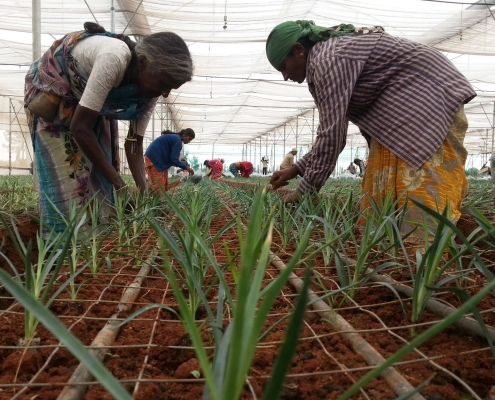
    People from vulnerable sections of society have struggled at the best of times to find fair and dignified work. Urban farming can provide livelihoods that are resilient to economic downturns and food price hikes, and contribute to cities’ economic development. Either through establishing community farms or through scaling up rooftop gardens to a city-wide movement, there are a variety of skilling opportunities that emerge — from building an urban farmer workforce who can contract-farm unused spaces, to training gardening staff to maintain small scale home gardens, growing cottage industries for women’s self help groups in the field of food processing, urban farm inputs manufacture (organic fertilizers, biopesticides, containers), sales and marketing opportunities in an urban farming retail network and so on. By supporting the urban farming movement, even if you do not employ someone directly, you help create opportunities along the entire supply chain when you set up a home vegetable garden.

  • Joining hands for the common good

    Public awareness & participation

    Urban farming, especially in larger complexes, schools and parks can help to create awareness about environmental issues, nutrition, pollution, water conservation, waste management, green energy and so on. It is a practical and highly visual demonstration of lessons on how to be self sufficient, sustainable and resilient.  It is a platform that can teach sensitivity and boost community spirit as people step forward to participate in an effort that benefits not just themselves, but has implications for others. By promoting urban farming, people personally benefit from access to fresh, organic fruits and vegetables, all the while learning to respect their impact on the planet and building a better future for all to share.

Learn about the Urban Thottam Missions

Sponsor a Garden Kit

Gift a Garden Mission

Sponsor a Mobile Vegetable Garden Kit for a vulnerable family in need.

Adopt a School

Green Schools Mission

Sponsor the setup & maintenance of a School Farm or an Educational Program for school children.

Resilient Urban Farming

Greener & Cooler Cities Mission

Set up your own rooftop vegetable garden or nominate your neighbourhood or RWA to participate in the movement.

Employment for Women in Community Farms

Green Livelihoods Mission

Sponsor the setup & maintenance of a Community Farm or a Farm Training Program for vulnerable communities.