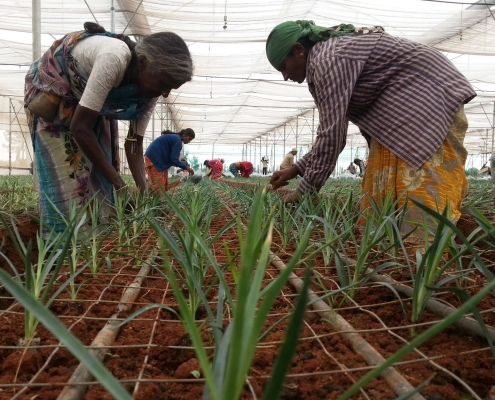
Chennai Urban Farming Initiative (CUFI)

The Chennai Urban Farming Initiative (CUFI) is an effort to utilize 1000s of acres of rooftops and vacant urban spaces to scale-up vegetable gardening through a citywide strategy. The overall objective is to foster a climate positive, green and inclusive resilience building program in Chennai. This program will develop a more sustainable and local food supply system, improve access to healthy food for Chennai citizens through innovative technical solutions for farming, and will ensure involvement and economic benefits for low-income neighbourhoods, all while greening and cooling the city.

Basis

The Chennai Urban Farming Initiative was conceptualized as a flagship project when the city’s Resilience Strategy was drafted in 2018 because it cut across so many resilience pillars — from climate change to vulnerable communities, through greening and urban heat reduction, promoting food security, encouraging people to harvest rainwater and segregate waste, providing livelihood opportunities for the urban poor, and fostering sustainability and self reliance.

Urban Farming is one of the strongest examples of effective nature-based risk reduction worldwide. From New York City to Quito to Bangkok and beyond, Urban Farming has become increasingly popular as a viable way to safeguard and strengthen communities. Climate change and the increasing frequency of disasters ranging from floods and droughts to the recent COVID-19 pandemic have provided added impetus to revitalizing urban food systems.

As part of the city’s Resilience Strategy development, the Chennai Resilience Centre conducted a survey among lower to middle income residents of Chennai to gauge interest towards urban farming and found interest levels to be high. Of a sample size of 304 respondents,

  • 5 out of 6 residents responded that they would like to grow their own produce
  • 83% of respondents expressed interest in maintaining a rooftop garden
  • 61% of respondents currently garden once a week and
  • 72% respondents identified as needing training in rooftop gardening.

During field visits by CRC, similar levels of interest have been echoed by residents of Perumbakkam, one of the largest government resettlement colonies located in a suburban area of Chennai city. Following preliminary discussions with the residents who expressed interest and some reservations about maintenance, a feasibility study was conducted by CRC and IRCDUC which clearly established the potential of setting up urban farms in the proximity of these resettlement colonies as a means of offering sustainable livelihood opportunities to women and youth living in these colonies.

CUFI design draws from decades of science and good practice. Building off the urban horticulture experience in India, and in close partnership with technical experts from the city and with interest in collaboration from 4 local government bodies (the Greater Chennai Corporation, Tamil Nadu Department of Horticulture and Plantation Crops, Tamil Nadu Corporation for Development of Women and the Tamil Nadu Skills Development Corporation), CUFI, through Urban Thottam and allied programs, is slated to roll out across Chennai in phases.

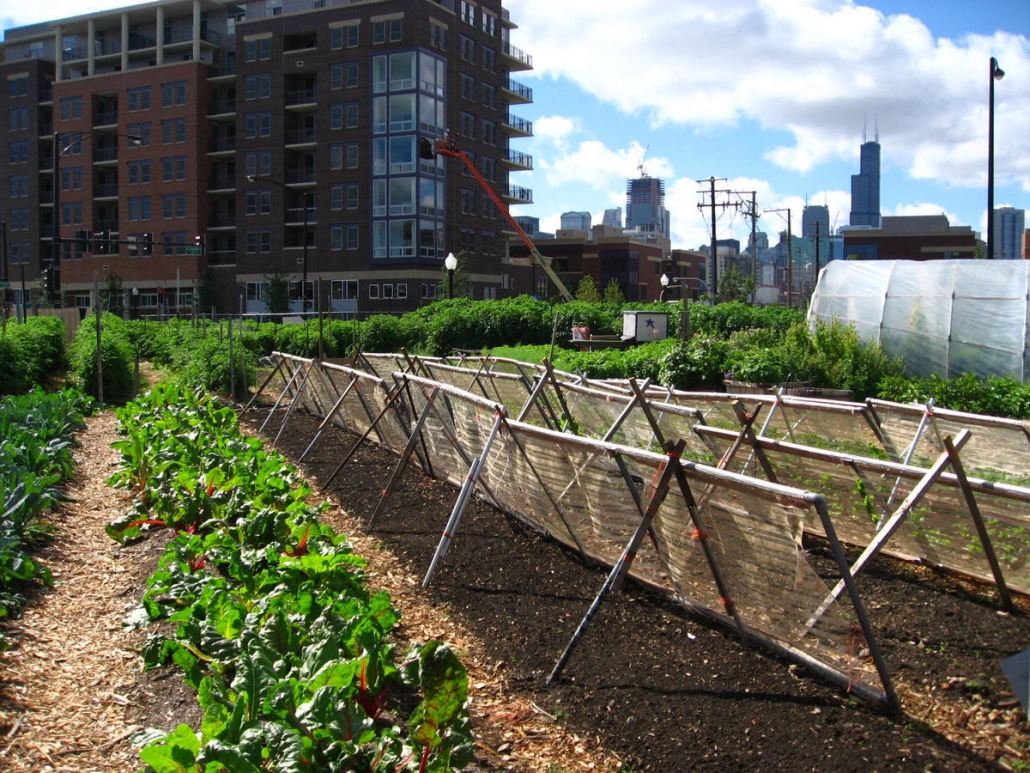
Inspiration: City Farm is one of Chicago’s oldest sustainable urban farms. Vacant lands in urban areas have been turned into vibrant organic farms using compost collected through the City Farm collective. Pictured here is a 1.5 acre farm being set up in a low-income housing layout.

CUFI Implementation Phases

Phase 1 (Ongoing)

Model Farms  – Green Schools Mission

CUFI will begin by targeting Public Schools (Corporation Schools) to introduce community vegetable gardening, prioritizing those in low income areas. The initiative will offer more nutritious and balanced meals for students during the day, thereby improving their performance, and will aim to reach and educate students’ families to encourage greater reach through at-home gardening. The School Gardens will also act as environmental education centres to help nourish and nurture our young leaders of tomorrow.

Funded by the Adrienne-Arsht Rockefeller Foundation Resilience Center (AARFRC), work on 3 Model Corporation School Farms run by Greater Chennai Corporation will commence in January 2021. These farms will serve as proof of concept and as living labs to assess and quantify the benefits of urban farming in Chennai, through a Monitoring & Evaluation effort that will be conducted over a one year period. This will kickstart the Green Schools Mission, the eventual target being to find sponsorship to build kitchen gardens in all 281 Corporation Schools, 1,336 Integrated Child Development Services Centres (ICDS / Anganwadis) as well as 700+ Private Schools in the city.

Gift a Garden Mission

In addition to the model farms, Mobile Kitchen Garden Kits, sponsored by AARFRC, will be distributed to over 2,000 low-income households, particularly to women-led house holds and other especially vulnerable categories. This initiative will seed the concept of urban homestead farming in Chennai, with the hope that it may be scaled under the Gift a Garden Mission – a program encouraging corporates and private citizens to come forward and sponsor garden kits for families in need.

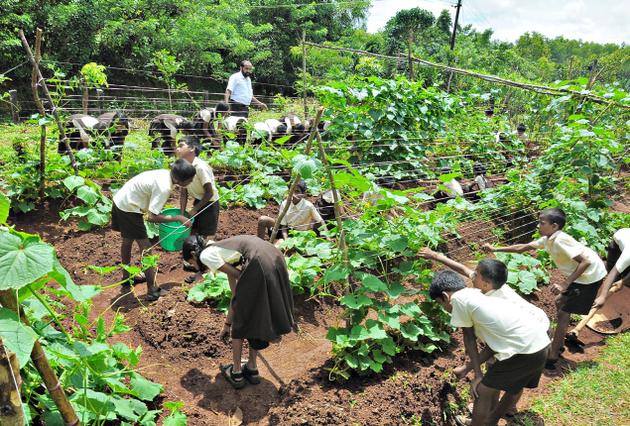
Inspiration: Students and teachers tend the school farm at Zilla Panchayat Higher Primary School, Mittur village, Karnataka. With donations made by the School Development and Monitoring Committee (SDMC), and support from local residents, this 108 year old govt. school was transformed from barren land to a productive farm that supplements the noon-meal program, with excess sold to generate revenue of 3-4 lakhs per year. Additional funds donated by the Indian Railways have led to the setting up rainwater harvesting and waste segregating units. [Source]

Greener & Cooler Cities Mission

In an effort to drive city-wide adoption, and advance climate resilience by reducing urban heat, conserving water and moving towards zero waste, an Awareness Campaign will be conducted across Chennai to issue a challenge to citizens, neighbourhoods and Resident Welfare Associations to step up and be a part of the PatchaiMadi Thottam (Green Terrace Garden) Movement. This initiative’s objective is to achieve the Greener & Cooler Cities Mission by converting barren, concrete spaces into flourishing green ones and by using rooftop/ terrace gardens as a tool to drive civic consciousness in the city by promoting associated practices of rain water harvesting, solar energy, waste segregation and composting.

Phase 2 & 3

Green Livelihoods Mission

Urban Farms have the potential to promote both food and job security for the most vulnerable. Establishing Makkal Thottams (Community Farms) in lower-income neighbourhoods and/or resettlement colonies which house the urban poor who have been resettled from locations such as river banks, and along the coast (either in response to major disasters like the 2015 floods or to reduce vulnerability to future flooding events), can create much needed livelihood opportunities for women and youth.

The Green Livelihoods Mission, through Makkal Thottams, can create jobs and provide skilling opportunities related to farming, food processing and marketing, and support agro-related cottage industries by self-help groups (e.g., banana sapling bags, organic fertilizer production, organic health supplement production (e.g., moringa, tulsi, other medicinal herbs).

The scaling and expansion of initiatives in Phase 1 to include contract farms in industrial spaces, institutions, corporate offices, and public parks maintained by the GCC, as well as larger scale adoption by residential areas (e.g., Rooftops for Lease to Small Farmers) can also support livelihoods by creating avenues for a skilled farming workforce to setup, maintain and manage small and large farms across the city.

As the program evolves and matures, a social enterprise can emerge that helps market fresh and processed produce from urban thottams through a dedicated retail chain, building a brand that improves revenues for urban farmers.

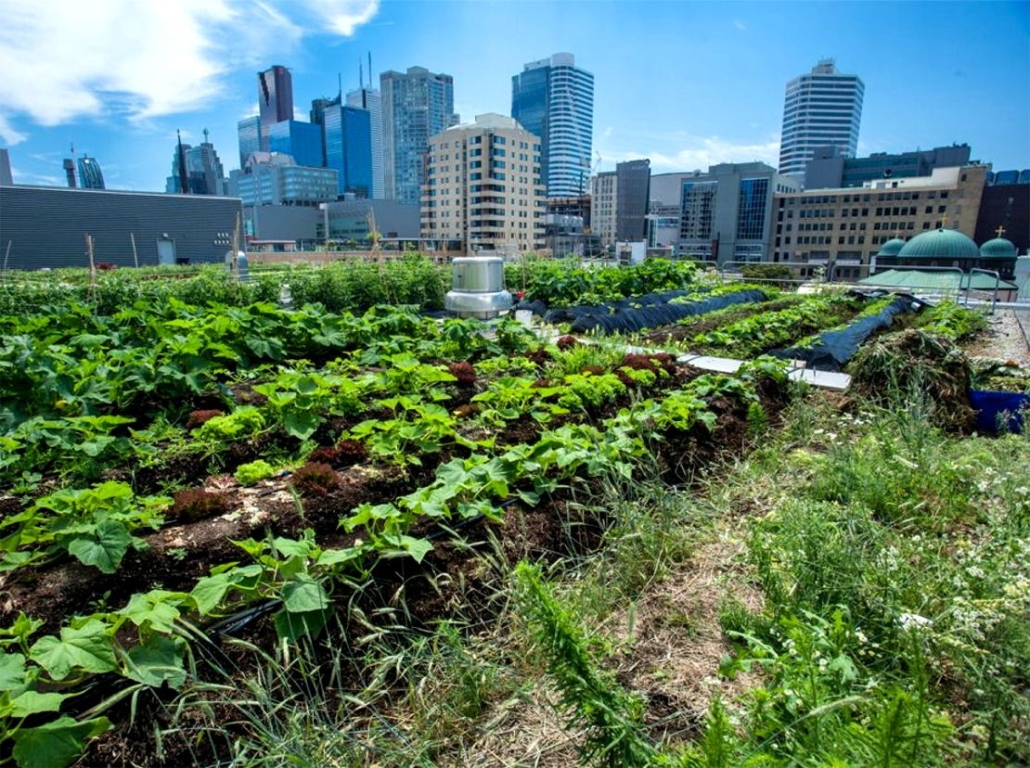
Inspiration: In 2009, Toronto, Canada was the first city in North America to pass a bylaw that mandated that all new constructions would install green roofs over 20-60% of the building area. This was based on the proven benefits of green roofs to reduce the Urban Heat Island effect, significantly reduce energy consumption and detain storm water. Rooftop vegetable gardens confer the same advantages, with the added benefit of food production. The Ryerson Urban Farm is one such example. Originally built in 2004, this 0.25 acre green roof was converted into an edible garden in 2013 by the Ryerson University’s student garden group. The roof farm produces over 3.5 tonnes of produce yearly. [Source]

CUFI Outcomes

The Initiative holds great potential for scaling up across the city and in reimagining food supply chains for the metropolis of Chennai, while offering a sustainable economic development opportunity to the city’s poor.


Integrating urban farming into the city system can contribute to the city’s capacity to reduce climate change risks and improve the urban environmental quality for the citizens of Chennai. The addition of green spaces will address air pollution, mitigate urban heat and reduce rainwater run-off, particularly significant for a city known for its harsh summers and water scarcity.


Skill development programs, while focused on farm basics and maintenance in the run-up to Phase 2, can expand to include training in food processing, basics of retail supply chains, sales and marketing. This will generate livelihoods for the vulnerable in addition to ensuring food security.


The program will lay a strong foundation for public – private partnership through the creation of a retail chain and locality level farmer’s markets. This set up can make the program financially viable, through the sale of farm fresh vegetables and value-added processed foods like jams, pickles and squashes. The same retail chain can also expand to include key elements required for organic urban farming such as organic pesticides and fertilisers developed by women’s self-help groups, farm implements, drip irrigation systems, seeds and saplings etc.


City government will be able to integrate national and state level policies, such as the National Guidelines for School Nutrition (Kitchen) Gardens 2019 and the state Mid-Day Meal program into city level programs and make Chennai an environmentally resilient, green, cool and socially inclusive city.

Learn more about the Missions

Sponsor a Garden Kit

Gift a Garden Mission

Sponsor a Mobile Vegetable Garden Kit for a vulnerable family in need.

Adopt a School

Green Schools Mission

Sponsor the setup & maintenance of a School Farm or an Educational Program for school children.

Resilient Urban Farming

Greener & Cooler Cities Mission

Set up your own rooftop vegetable garden or nominate your neighbourhood or RWA to participate in the movement.

Employment for Women in Community Farms

Green Livelihoods Mission

Sponsor the setup & maintenance of a Community Farm or a Farm Training Program for vulnerable communities.