
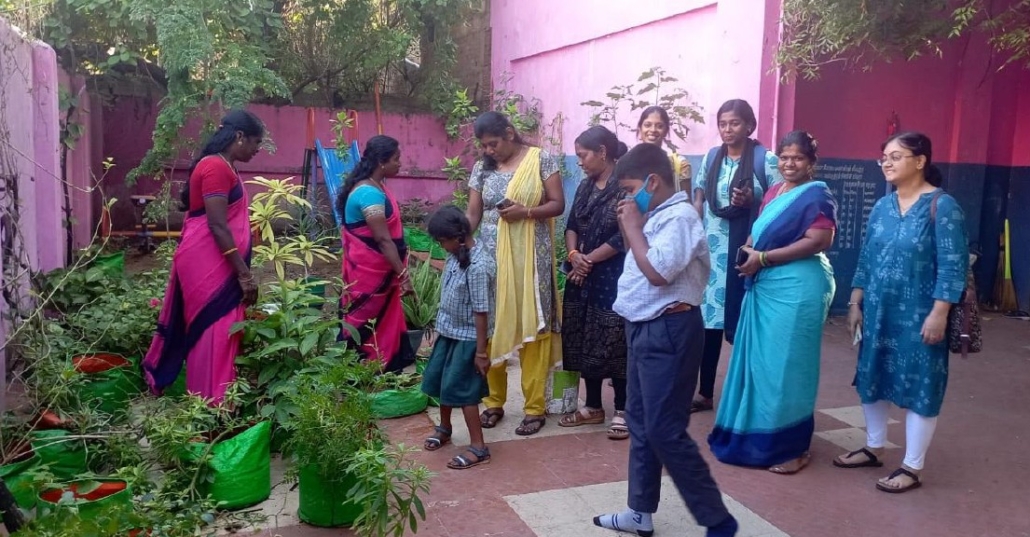
The Chennai Urban Farming Initiative (CUFI) was established with the multi-pronged goal of improving access to nutritious food, providing training and livelihood opportunities in gardening for vulnerable communities, and increasing green spaces in the city, which also aids in greening and cooling.
To achieve this, Mobile Vegetable Garden Kits (MVGKs) were distributed, along with in-person training and online support from the Chennai Resilience Centre (CRC) team. Maintenance Kits were also provided to support ongoing efforts.
Focus Group Discussions (FGDs) were conducted with approximately 40 participants from partner NGOs, ICDS centres, schools, and a homeless shelter between September 2022 and March 2023 to evaluate progress and plan future iterations.
Key Learnings and Benefits:
- Improved Access to Food and Nutrition: Participants reported harvesting organic vegetables like okra, tomatoes, and greens, significantly reducing their market purchases. This also led to improved nutrition, particularly for vulnerable groups such as children and pregnant women, with children consuming more greens when grown at home or centres.
- Access to Medicinal Plants: The project provided easy access to medicinal plants like neem, basil (thulsi), and karpooravalli, which were used for common illnesses and as natural pest control. These plants also served as conversation starters, attracting parents to the gardens.
- Communal Spaces and Learning Sites: Gardens became shared spaces where children actively participated, learning about plants, colours, shapes, and sizes. Mothers also got involved by donating equipment and plants. Gardening helped participants relax and reduce stress.
- Sustainable Behaviour: The gardens fostered practices such as composting (with community involvement), resource conservation, and recycling (e.g., reusing water, discarded items like PET bottles for drip irrigation, and 20-litre water cans for growing plants).
Challenges Identified:
- Garden Maintenance: The most recurring challenge was garden maintenance, including issues with vegetables not growing to expected extent, and pest attacks (especially rats) and plant diseases.
- Resource Needs: Participants expressed a need for more soil and organic fertilisers to combat pests and ensure healthy growth.
- Limited Vegetable Harvest: While greens were sufficiently harvested, the vegetable harvest was often not enough to completely substitute market purchases.
Future Project Adjustments:
- In response to findings, CRC is now distributing increased quantities of greens seeds and a changed mix of seed packets, as well as providing herbal plants.
- Improved ‘Maintenance Kits’ now contain organic growth enhancers (panchakavya) and more soil to address maintenance challenges.
- Strategies for managing rat infestations are being documented and shared.
- CRC maintains an active WhatsApp platform for beneficiary support and conducts regular field visits.
- Future iterations will focus on fostering cross-site learning and building a community network among participants.
- There is an increased focus on making gardens self-reliant by reducing the provision of maintenance kits and conducting advanced training sessions for self-sustenance. Non-financial incentives like monthly competitions are also being used to encourage garden maintenance, composting, and community involvement.
 Chennai Resilience Centre