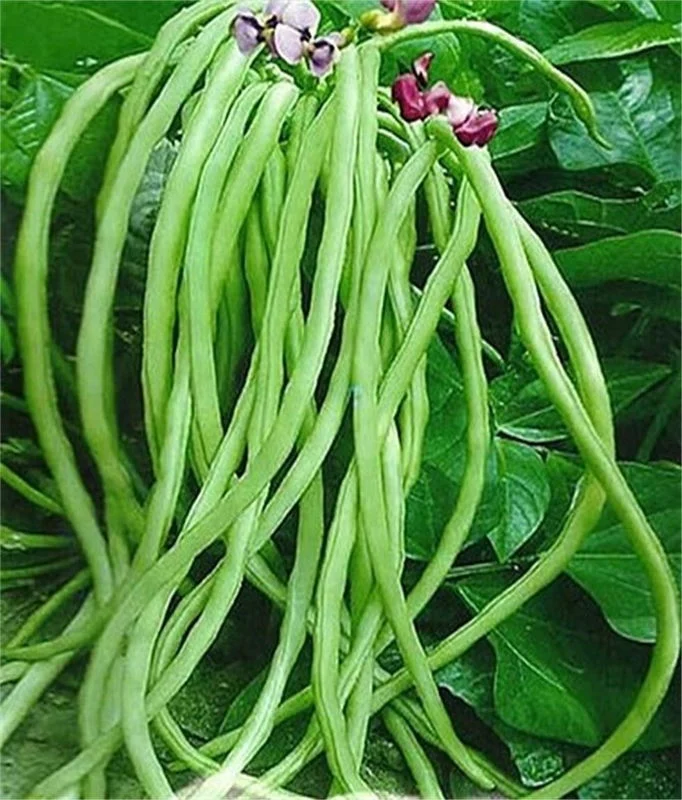
Cowpea (Long Beans)
Also known as: Yard Long Bean, Asparagus Bean
Tamil Name: Karamani, Payathangai; Scientific Name: Vigna unguiculata;
Planting/Sowing
Feb – Mar; Jun – Jul;
Harvesting
Apr – May; Aug – Sep;
First Harvest
~50 Days

Also known as: Yard Long Bean, Asparagus Bean
Tamil Name: Karamani, Payathangai; Scientific Name: Vigna unguiculata;
Feb – Mar; Jun – Jul;
Apr – May; Aug – Sep;
~50 Days
| Crop category | Legume |
| Life span | Annual |
| Type of crop | Creeper |
| Part(s) of the crop to harvest | Pod |
| Avg. Height | 20–30 cm (8–12 inches) |
The Cowpea is best grown in warm humid climate.
When to plant / sow seeds (ideal season):
Feb – Mar; Jun – Jul;
How to plant:
Direct sowing;
Sow the seeds at a spacing of 45 x 15cm.
NOTE: Please go through the Guides in the Knowledge Base for more details on topics ranging from Spacing & Lighting to Soil and Nutrients.
Irrigate the plants once in 7 days during summer and once in 15 days during rainy season.
NOTE: Irrigation should depend on how moist / wet the soil is. Check your plants everyday to see if they require irrigation or not. Check the Watering & Irrigation guide for more info.
When to harvest
For vegetable, green pods are to be harvested 45 – 50 days after sowing and the harvest to be repeated 5-7 days once. For grains, the crop can be harvested 90 days after sowing.
How to harvest
Cut the pods with garden scissors. Avoid plucking else you may damage the plant.
NOTE: Harvest periods can vary depending on the environmental, climatic, soil conditions.
| Pests | Aphids and pod borer |
| Common Diseases/ Problems | Powdery mildew |
| Pest and Disease prevention measure(s) | Read Pests & Diseases for more information. |
Cowpeas are one of the oldest known domesticated crops. While most commonly grown for the dried beans, which are high in protein, the bean pods are actually more nutritious. The tender green leaves of this plant may also be eaten.
Triads that work well together:
Brinjal, Beans & Marigold;
Pumpkin, Beans & Radish;
Cucumber, Radish, Cowpea;
Crops by Expertise
 © Ravichandra
 © Stephen Ausmus /USDA ARSCucumber
 © Mac Choo
 © Chinmayee Mishra
 © Joydeep
 © Ctg4Rahat
 © H Zell

